


 1
1

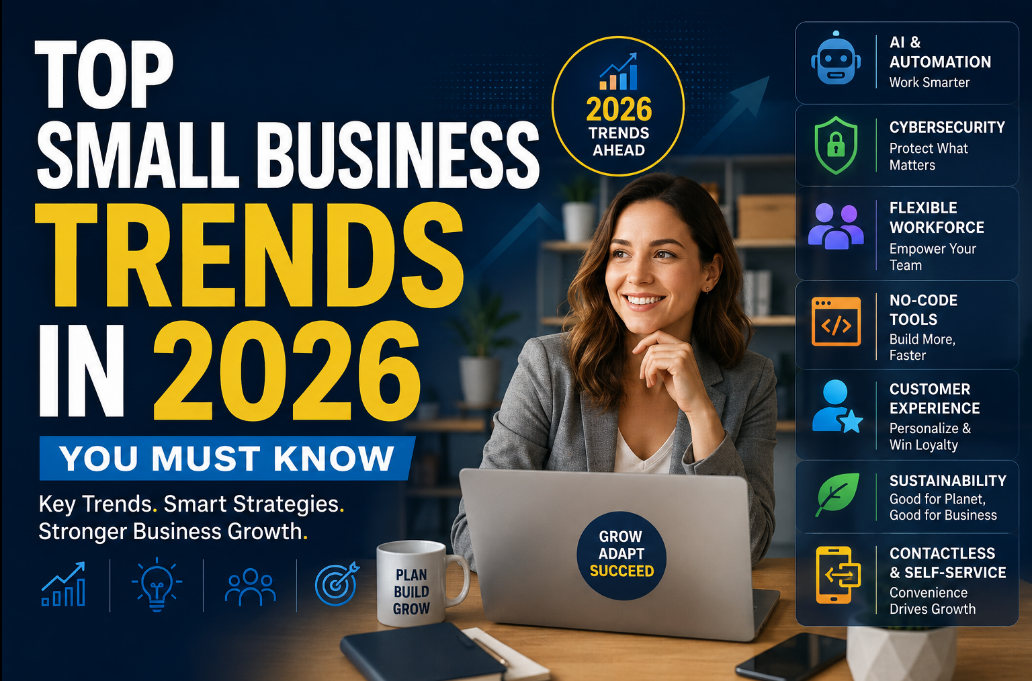
Top Small Business Trends in 2026 You Must Know
Small business owners heading into 2026 aren’t just adapting to change — they’re racing to keep up with it. Technology, customer expectations, and the workforce are all shifting at once, and the businesses that move early are the ones pulling ahead.
Understanding the top small business trends in 2026 isn’t optional anymore — it’s the difference between staying competitive and getting left behind.
In this guide, we’ll break down the biggest shifts shaping small businesses this year, backed by real data, and show you exactly how to act on them.
Table of Contents
Why Small Business Trends Matter More in 2026:
Small businesses drive a huge share of the U.S. economy, and 2026 is shaping up to be a pivotal year for how they operate and grow.
Several forces are converging at once:
- Faster, cheaper access to AI and automation tools
- Rising cybersecurity threats targeting smaller companies
- Shifting workforce expectations around flexibility and pay
- Customers demanding more personalized, values-driven experiences
- Tighter margins from slower economic growth and inflation
Business confidence remains strong heading into the year — the U.S. Chamber of Commerce and MetLife Small Business Index recently hit a record high, reflecting cautious optimism among owners. But confidence alone isn’t a strategy. Knowing which small business trends in 2026 actually matter is what separates growth from stagnation.
Featured Snippet Answer: The top small business trends in 2026 include AI and automation adoption, rising cybersecurity needs, flexible workforce models, sustainability practices, and personalized customer experiences.
Top Small Business Trends in 2026:
Here are the trends reshaping how small businesses compete, operate, and grow this year.
1. AI and Automation Become Everyday Tools:
AI is no longer a “nice to have” — it’s becoming standard operating equipment for small businesses.
- Generative AI use among small businesses jumped from 23% in 2023 to 58% today
- Roughly 75% of small and midsize businesses are now actively investing in AI tools
- Over one-third have fully integrated AI into daily operations
Small businesses are using AI for:
- Automated customer service and chatbots
- Marketing content creation and email campaigns
- Sales and demand forecasting
- Scheduling, invoicing, and administrative tasks
Action Tip: Start with your biggest time-drain — whether that’s customer support, content, or admin work — and introduce one AI tool there first.
Want to learn more about artificial intelligence and how it helps businesses? Read our complete guide on Artificial Intelligence: The Complete 2026 Guide.
2. Cybersecurity Becomes Non-Negotiable:
As small businesses adopt more digital tools, they also become bigger targets for cybercriminals.
Common threats include:
- Phishing scams and ransomware
- Weak or reused passwords
- Outdated software and point-of-sale vulnerabilities
- Unsecured cloud storage and remote access points
Best practices for 2026:
- Enable multi-factor authentication on all business accounts
- Keep software and systems updated regularly
- Train employees to recognize phishing attempts
- Encrypt sensitive customer and financial data
- Run routine data backups and test recovery plans
3. Flexible and Augmented Workforce Models:
The workforce conversation has moved beyond remote vs. in-office. In 2026, it’s about flexibility, upskilling, and human-AI collaboration.
Key shifts include:
- Growth of the “augmented worker” — employees using AI tools to boost productivity
- Rising demand for contract, freelance, and seasonal talent to manage variable workloads
- Increased competition for skilled, tech-savvy employees
- Greater emphasis on employee upskilling and training programs
Action Tip: Offer tailored benefits — wellness support, flexible scheduling, and training opportunities — to improve retention in a tight labor market.
4. No-Code and Low-Code Tools Level the Playing Field:
Building custom business tools used to require developers and big budgets. Not anymore.
- No-code platforms can reduce development time by up to 90%
- Businesses report cost reductions of roughly 70% compared to traditional software development
- The no-code/low-code market is projected to approach $50 billion by 2028
This means small businesses can build custom apps, dashboards, and workflows that fit their exact needs — without hiring a technical team.
5. Hyper-Personalized Customer Experience:
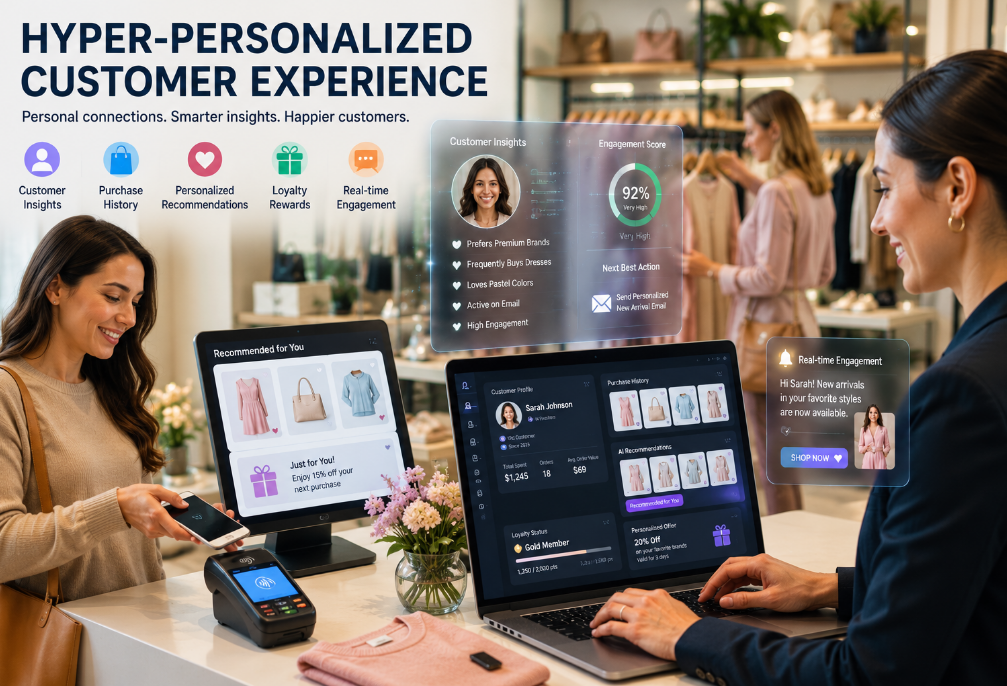
Customers expect to be treated as individuals, not transactions — and businesses that deliver stand to gain significantly.
- Customer-centric brands report profits up to 60% higher than competitors
- Businesses focused on customer experience see notably higher retention and cross-sell rates
- Over 60% of customers feel most companies treat them like just a number — creating a clear opening for small businesses to stand out
How small businesses can personalize CX:
- Use AI-backed CRM tools to track preferences and purchase history
- Send personalized offers and recommendations
- Build loyalty programs with individualized rewards
- Maintain a consistent experience across in-store, online, and app channels
According to the U.S. Small Business Administration (SBA), small businesses contribute significantly to the U.S. economy.
6. Sustainability as a Competitive Advantage:
Sustainability has shifted from a “nice extra” to a genuine business driver.
Examples of small businesses embracing sustainability:
- Retailers sourcing upcycled or ethically made products
- Cafés switching to biodegradable packaging and local sourcing
- Manufacturers adopting closed-loop, waste-reducing processes
Nearly half of consumers now prioritize sustainable products when shopping, making eco-friendly practices both an ethical choice and a smart growth strategy.
7. Contactless Payments and Self-Service Options:
Convenience continues to drive customer purchasing decisions.
- Roughly 46% of Americans make contactless payments on a weekly basis
- Self-service options — from checkout kiosks to DIY return portals — are expanding into small businesses
- Mobile wallets like Apple Pay and Google Pay are becoming standard checkout expectations
Businesses that modernize their payment and service infrastructure reduce friction and meet rising customer expectations for speed.
8. Multi-Hyphenate and Niche Business Models:
More small businesses are diversifying revenue streams under one roof, while others are going hyper-specific to dominate a niche.
- Multi-hyphenate businesses combine two or more offerings to build loyalty and open new marketing channels
- Hyper-niche businesses win by solving one problem better than anyone else
- Both models reduce reliance on a single revenue source, improving resilience
How to Prepare Your Business for These Trends:
You don’t need to tackle every trend at once. Use this simple framework:
- Audit your current operations — identify your biggest bottlenecks and vulnerabilities
- Prioritize based on impact — start with the trend that solves your most pressing problem
- Start small and test — pilot one AI tool, one security upgrade, or one CX improvement at a time
- Measure results — track time saved, cost reduced, or customer satisfaction improved
- Scale what works — expand successful pilots across the business
Pro Tip: Don’t chase every trend at once. Businesses that focus on one or two high-impact changes typically see faster, more sustainable results than those spreading resources too thin.
Common Mistakes Small Businesses Make with Trends:
Even with the right trends in view, execution matters. Avoid these common pitfalls:
- Adopting AI without a clear use case — technology for technology’s sake rarely pays off
- Ignoring cybersecurity basics — most breaches exploit simple, preventable gaps
- Overlooking employee training — new tools fail without proper onboarding
- Copying competitors blindly — not every trend fits every business model
- Waiting too long to act — early adopters typically capture the biggest competitive advantage
Frequently Asked Questions:
1. What are the biggest small business trends in 2026?
The biggest trends include AI and automation adoption, stronger cybersecurity practices, flexible workforce models, no-code technology, personalized customer experience, and sustainability initiatives.
2. Is AI really necessary for small businesses in 2026?
While not mandatory, AI adoption is becoming a practical necessity — over half of small businesses already use AI tools, and adoption is growing rapidly across every industry.
3. How can small businesses improve cybersecurity affordably?
Start with free or low-cost basics: multi-factor authentication, regular software updates, employee phishing training, and routine data backups.
4. Are no-code tools really useful for non-technical business owners?
Yes. No-code platforms let business owners build custom apps and workflows without coding knowledge, often cutting development time and costs significantly.
5. How important is sustainability for small business growth in 2026?
Very important — nearly half of consumers now prioritize sustainable products, making eco-friendly practices a genuine driver of customer loyalty and sales.
Conclusion:
The small business trends in 2026 all point to one theme: the tools and strategies once reserved for large enterprises are now within reach of any small business owner.
From AI and automation to cybersecurity and personalized customer experience, the businesses that act early — even in small steps — will be the ones positioned to grow.
Ready to future-proof your business? Pick one trend from this guide that addresses your biggest current challenge and start implementing it this week.
One thought on “Top Small Business Trends in 2026 You Must Know”