



 1
1


Best Study Tips for Kids: A Parent’s Guide:
“I don’t know how to study” is one of the most common things kids say right before test week turns into a nightly battle over homework.
The truth is, most kids aren’t struggling because they lack intelligence — they’re struggling because no one ever taught them how to study effectively.
That’s where the best study tips for kids come in. With the right habits and a little structure, studying can go from stressful to manageable — even enjoyable — for children of almost any age.
In this guide, you’ll find practical, age-appropriate strategies that actually work, backed by how children’s brains learn best.
These best study tips for kids can help parents create a simple routine that makes learning more focused and less stressful.
Table of Contents:
Why Good Study Habits Matter Early:
Study skills aren’t something kids automatically pick up — they need to be taught, just like reading or math.
Children who develop strong study habits early tend to:
- Retain information longer instead of cramming and forgetting
- Feel less anxious about tests and homework
- Build independence and confidence in their own abilities
- Develop time-management skills that carry into adulthood
Featured Snippet Answer: The best study tips for kids include setting a consistent routine, breaking work into small chunks, minimizing distractions, using active recall, and rewarding effort rather than just results.
The earlier these habits form, the more natural they become — which is exactly why finding the best study tips for kids matters so much during elementary and middle school years.

Best Study Tips for Kids by Age Group:
Not every study strategy works for every age. Here’s how to tailor your approach.
Elementary School (Ages 5–10):
Young children need short, engaging sessions with plenty of variety.
- Keep study sessions to 10–20 minutes at a time
- Use games, flashcards, and hands-on activities
- Read aloud together to build comprehension
- Praise effort, not just correct answers
Middle School (Ages 11–13):
Kids this age can handle more structure and independence.
- Introduce a basic homework planner or checklist
- Teach note-taking basics during class
- Encourage 25–30 minute focused study blocks
- Start building self-quizzing habits
High School (Ages 14–18):
Teens benefit from strategies that mirror real academic demands.
- Use color-coded planners or digital calendars
- Practice active recall and spaced repetition
- Study in 45–50 minute blocks with short breaks
- Teach prioritization for multiple subjects and deadlines
Creating the Perfect Study Environment:
Where a child studies matters just as much as how they study.
1. Choose a Consistent Spot:
A dedicated study space — even a small desk or table corner — helps the brain associate that location with focus.
2. Minimize Distractions:
- Keep phones and tablets out of reach during study time
- Turn off TV and background noise, unless soft instrumental music helps
- Keep the space tidy and free of unrelated toys or clutter
3. Ensure Good Lighting and Comfort:
Poor lighting and uncomfortable seating can cause fatigue faster than most parents realize, cutting study sessions short.
4. Stock Study Supplies;
Keep pencils, paper, a calculator, and other basics within reach so kids don’t lose focus hunting for materials mid-session.
Proven Study Techniques That Work:
These are some of the most effective, research-backed methods for helping kids learn and retain information.
1. The Pomodoro Technique (Modified for Kids):
Break study time into short focused bursts followed by breaks:
- Study for 15–25 minutes (based on age)
- Take a 5-minute break to stretch or move around
- Repeat for 2–4 cycles
- Take a longer 15–20 minute break afterward
2. Active Recall:
Instead of simply re-reading notes, kids should test themselves on the material.
- Use flashcards to quiz key facts
- Cover notes and try to recall main points from memory
- Explain the topic out loud, as if teaching someone else
3. Spaced Repetition:
Reviewing material over several days — rather than cramming the night before — dramatically improves long-term memory.
Example schedule:
- Day 1: Learn new material
- Day 3: Quick review
- Day 7: Review again
- Day 14: Final review before the test
4. Chunking Information:
Breaking large topics into smaller, manageable pieces makes studying feel less overwhelming.
- Split a chapter into sections
- Focus on one concept at a time
- Combine chunks into a full review closer to test day
5. Visual Aids and Mind Maps:
Many kids are visual learners. Diagrams, color-coding, and mind maps can make abstract concepts click faster than plain text.
Research on learning techniques shows that Retrieval Practice can be an effective way to strengthen long-term learning.
How Parents Can Support Without Micromanaging:
Parental involvement helps — but too much control can backfire.
Do:
- Set a consistent daily study time
- Ask your child to explain what they learned
- Celebrate effort and progress, not just grades
- Help them break big assignments into smaller steps
Avoid:
- Doing the homework for them
- Hovering over every question
- Comparing them to siblings or classmates
- Turning study time into a source of constant conflict
Pro Tip: Ask your child, “What’s the best way for you to remember this?” It builds self-awareness about their own learning style, which pays off for years.
Good health can also support better learning and concentration. For more information, see our guide on Blood Tests For Vitamin And Mineral Deficiencies.
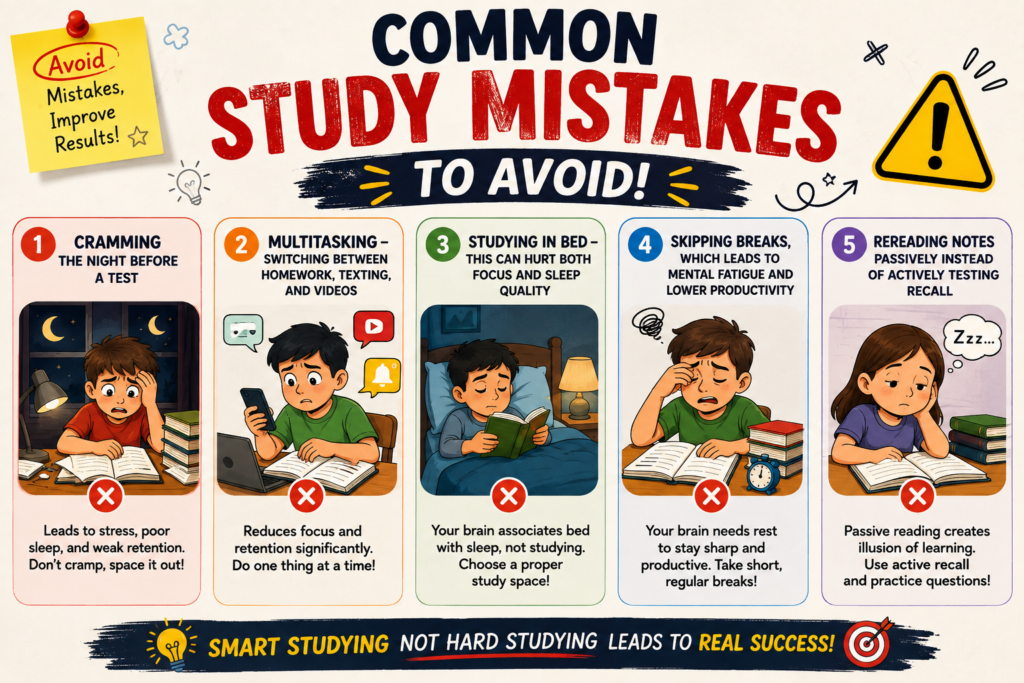
Common Study Mistakes to Avoid:
Even well-intentioned study habits can go wrong. Watch for these common pitfalls:
- Cramming the night before a test instead of spacing out review sessions
- Multitasking — switching between homework, texting, and videos reduces retention significantly
- Studying in bed — this can hurt both focus and sleep quality
- Skipping breaks, which leads to mental fatigue and lower productivity
- Rereading notes passively instead of actively testing recall
Frequently Asked Questions:
1. What are the best study tips for kids who get distracted easily?
Break study sessions into short 15–20 minute blocks, remove digital distractions, and use a dedicated, clutter-free study space to help maintain focus.
2. How long should kids study each day?
This varies by age — elementary students typically need 10–20 minutes per session, while high schoolers can handle 45–50 minute focused blocks with breaks in between.
3. What is the most effective study method for children?
Active recall and spaced repetition are among the most effective, research-backed techniques, as they strengthen long-term memory far better than simply rereading notes.
4. How can parents help without doing the work for their child?
Parents can set a consistent routine, ask their child to explain what they’ve learned, and offer encouragement — while avoiding the urge to correct every mistake or complete tasks for them.
5. Is it bad for kids to study right before bed?
Light review before bed can help with memory consolidation, but intense studying or cramming close to bedtime can increase stress and disrupt sleep quality.
Conclusion:
The best study tips for kids aren’t about working harder — they’re about working smarter with age-appropriate techniques, a consistent routine, and a distraction-free space.
Small, consistent changes — like short focused study blocks or quick self-quizzing — can make a noticeable difference in confidence and grades over time.
Ready to help your child build better study habits? Pick one tip from this guide and start using it this week — consistency is what makes the biggest difference.
The best study tips for kids work best when parents introduce them gradually and give children time to develop their own study habits.
One thought on “Best Study Tips for Kids: A Parent’s Guide:”