



 1
1

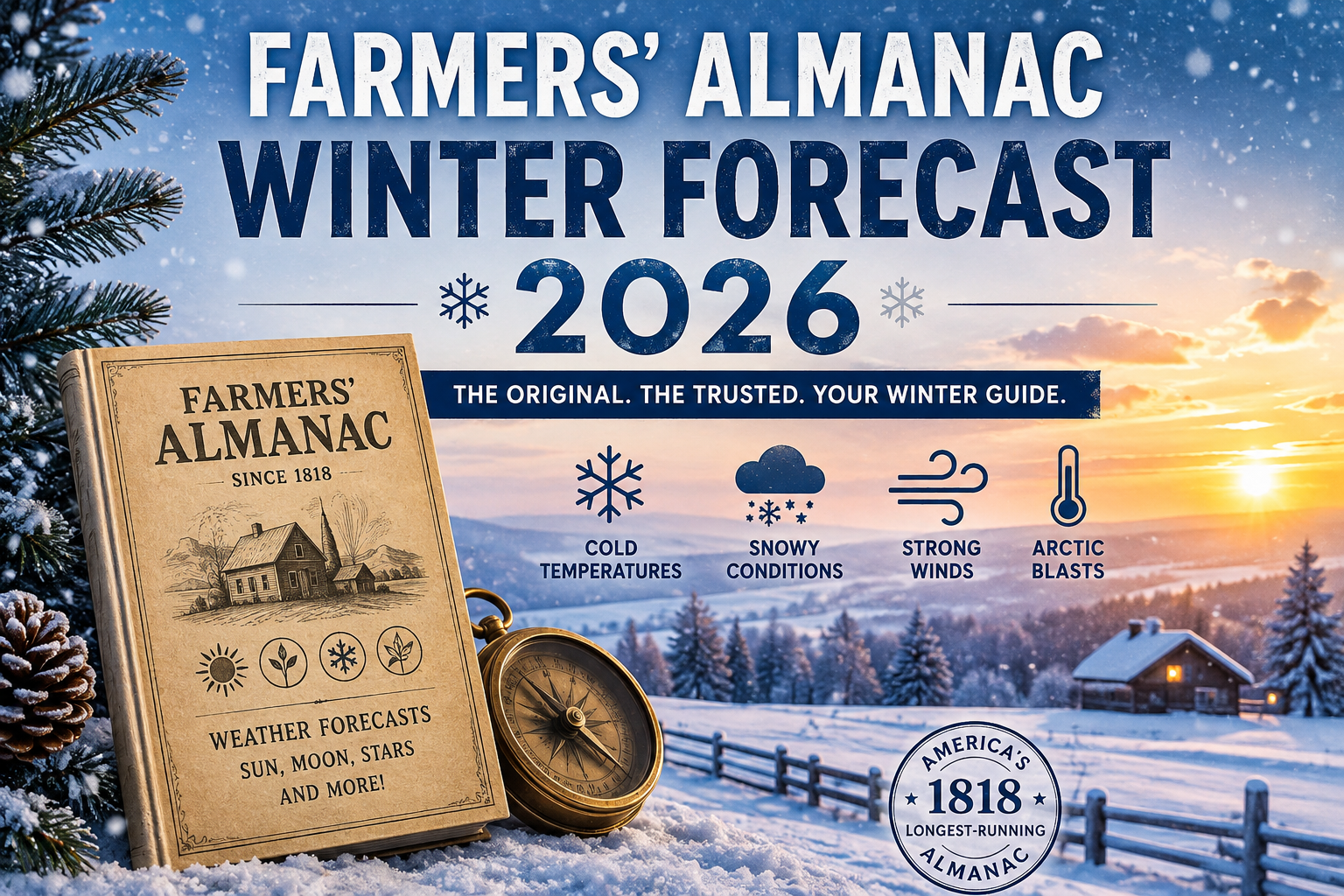
Farmers Almanac Winter Forecast 2026: What to Expect
Shovel or rain boots? This year, you might need both — sometimes in the same week.
The Farmers Almanac winter forecast 2026 is out, and it’s calling for a season of sharp contrasts: a wet, stormy South, quick cold snaps up north, and a Northeast caught in a tricky mix of rain, ice, and snow.
Since 1818, the Farmers’ Almanac has published the longest-running long-range weather forecast in North America. Here’s exactly what it’s predicting for your region this winter, and how it stacks up against other forecasts.
Table of Contents
Farmers Almanac Winter Forecast 2026: The Big Picture:
The Farmers Almanac winter forecast 2026 paints a picture of a season defined by contrasts rather than one single weather pattern.
Key takeaways from this year’s outlook:
- An active, wet storm track across the southern U.S.
- Quick bursts of snow and bitter cold sweeping through northern states
- A complicated, unpredictable mix of rain, sleet, and snow in the Northeast
- A less dependable, more changeable snow season in the Pacific Northwest
Featured Snippet Answer: The Farmers Almanac winter forecast 2026 predicts a wet, stormy southern U.S., quick cold snaps across the northern states, and a mixed pattern of rain, sleet, and snow in the Northeast, driven largely by El Niño conditions.
The Almanac’s editors summed it up simply: expect a winter of “snow, sleet, and surprises.”
How the Farmers Almanac Makes Its Predictions:
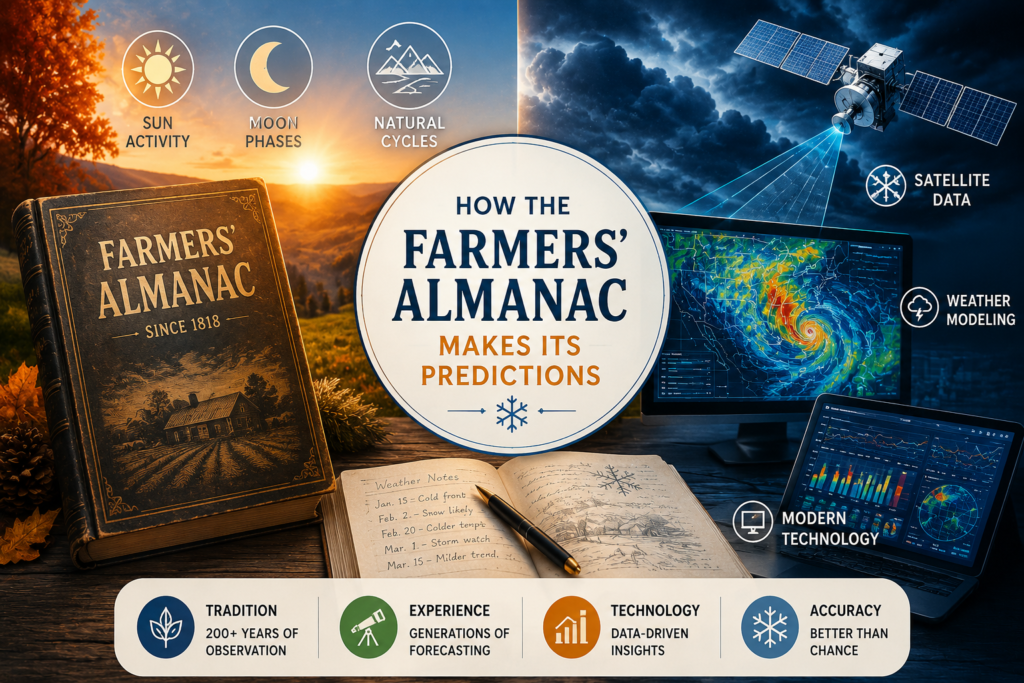
The Almanac’s forecasting method blends old-school tradition with modern meteorology.
The Traditional Formula:
The core method dates back to founding editor David Young and has been passed down through generations of Almanac forecasters, now credited to the pseudonym “Caleb Weatherbee.” It factors in:
- Recurring natural weather cycles
- Solar activity and sunspot patterns
- Lunar position and tidal influence
- Historical weather pattern analysis
Modern Enhancements:
These traditional calculations are supplemented — not replaced — by:
- Satellite observations
- Computer weather modeling
- Current meteorological data
- Large-scale ocean and atmospheric pattern analysis
The Almanac states its regional forecasts run 80–85% accurate, though independent reviews have found actual accuracy somewhat lower — still meaningfully better than chance for long-range planning purposes.
Regional Winter Outlook 2026–2027:
Here’s how the Farmers Almanac winter forecast 2026 breaks down by region.
1. Southern U.S. (California to the Southeast):
This region is expected to see the most active weather of the winter.
- Frequent storm systems moving from Southern California and the Desert Southwest through Texas
- Heavier-than-normal precipitation across the Gulf Coast and Southeast
- Occasional surges of cold air colliding with moisture, bringing sleet, freezing rain, or heavy wet snow
- Strong mountain snowfall potential in the southern Rockies
2. Northern Plains, Upper Midwest, and Great Lakes:
Temperatures here should run close to normal overall — but “normal” doesn’t mean mild.
- Fast-moving Alberta clippers bringing sudden cold snaps
- Brief but intense snow squalls and blustery winds
- Frequent swings between thawing and freezing, creating rapidly shifting road conditions
- Periods of drier weather when the southern storm track dominates
3. Northeast and New England:
The Almanac flags this as the season’s most complicated region to forecast.
- Coastal areas may see more rain and mixed precipitation than snow
- Inland areas face several rounds of heavy, wet snow, especially in January and February
- Small shifts in storm track or temperature could turn rain into ice, or slush into a major snowstorm
4. Pacific Northwest:
Expect a more changeable, less predictable snow season overall.
- Snowfall reliability may be lower than in recent winters
- Brief but intense bursts of cold, wind, and snow remain possible despite the overall unpredictability
The Role of El Niño This Winter:
El Niño is expected to be a major influence on the Farmers Almanac winter forecast 2026, shaping precipitation patterns across the country.
- El Niño refers to warmer-than-average ocean temperatures in the tropical Pacific
- This pattern tends to shift the jet stream, favoring wetter conditions across the southern U.S.
- It also contributes to the active storm corridor stretching from the Southwest through the Gulf Coast and Southeast
Both the Farmers Almanac and NOAA agree that El Niño is likely to remain in place through the winter and into early 2027, making it one of the season’s defining climate drivers.
Farmers Almanac vs. NOAA Forecast:
It’s worth comparing the Almanac’s outlook to NOAA’s official seasonal forecast, since the two use very different methods.
| Factor | Farmers Almanac | NOAA |
|---|---|---|
| Method | Proprietary formula + modern data | Climate models + ocean-atmosphere data |
| Southern U.S. precipitation | Wetter than normal | Above-normal precipitation (similar) |
| Northwest/Great Lakes precipitation | Drier at times | Below-normal precipitation (similar) |
| Temperature outlook | Near-normal, with cold snaps | Above-normal temperatures favored |
The two forecasts largely agree on precipitation patterns, but diverge on temperature — NOAA leans toward a broadly milder winter overall, while the Almanac emphasizes sharp, temporary cold snaps rather than sustained cold.
How to Prepare for This Winter:
Regardless of which forecast proves more accurate, a little preparation goes a long way.
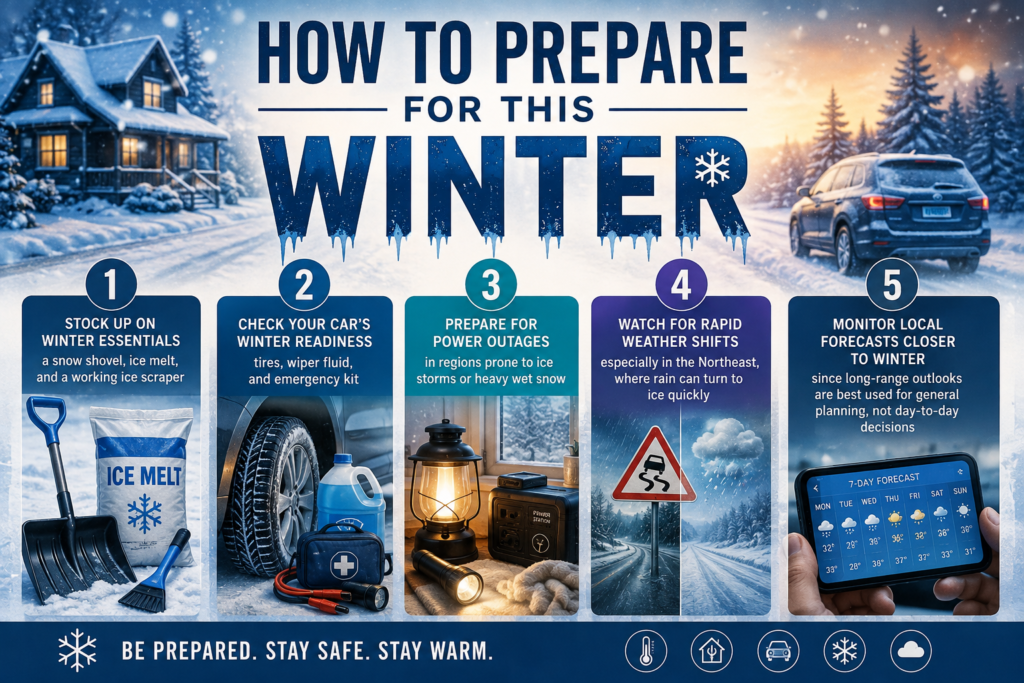
- Stock up on winter essentials — a snow shovel, ice melt, and a working ice scraper
- Check your car’s winter readiness — tires, wiper fluid, and emergency kit
- Prepare for power outages in regions prone to ice storms or heavy wet snow
- Watch for rapid weather shifts, especially in the Northeast, where rain can turn to ice quickly
- Monitor local forecasts closer to winter, since long-range outlooks are best used for general planning, not day-to-day decisions
These productivity tips can also help you stay organized when preparing your home, car, and emergency supplies for winter.
Frequently Asked Questions:
1. What does the Farmers Almanac predict for winter 2026?
The Farmers Almanac winter forecast 2026 predicts a wet, active southern storm track, quick cold snaps across the northern U.S., and a complicated mix of rain, sleet, and snow in the Northeast.
2. How accurate is the Farmers Almanac winter forecast?
The Almanac claims 80–85% accuracy, though independent reviews suggest actual accuracy is somewhat lower — still useful for general seasonal planning rather than day-specific predictions.
3. Will winter 2026-2027 be colder than normal?
Not necessarily. The Farmers Almanac expects near-normal average temperatures in many northern regions, punctuated by sudden, brief cold snaps rather than sustained extreme cold.
4. How does El Niño affect the 2026 winter forecast?
El Niño is expected to favor wetter-than-normal conditions across the southern U.S. and contribute to an active storm track from the Southwest through the Gulf Coast and Southeast.
5. Does the Farmers Almanac forecast agree with NOAA?
Largely, yes, on precipitation patterns for the South and Northwest. The two diverge mainly on temperature, with NOAA favoring a broadly milder winter and the Almanac emphasizing sharp temporary cold snaps.
Conclusion:
The Farmers Almanac winter forecast 2026 points to a winter defined by contrasts — a wet, stormy South, quick cold bursts up north, and an unpredictable mix of precipitation in the Northeast.
Whatever your region, a little early preparation can save a lot of last-minute scrambling once the first storm hits.
Want the full regional breakdown for your area? Check the Farmers’ Almanac long-range forecast page and start planning your winter now.
Long-range seasonal forecasts are intended for general planning purposes. Always check your local short-term forecast closer to the date for accurate, actionable weather information.