



 1
1

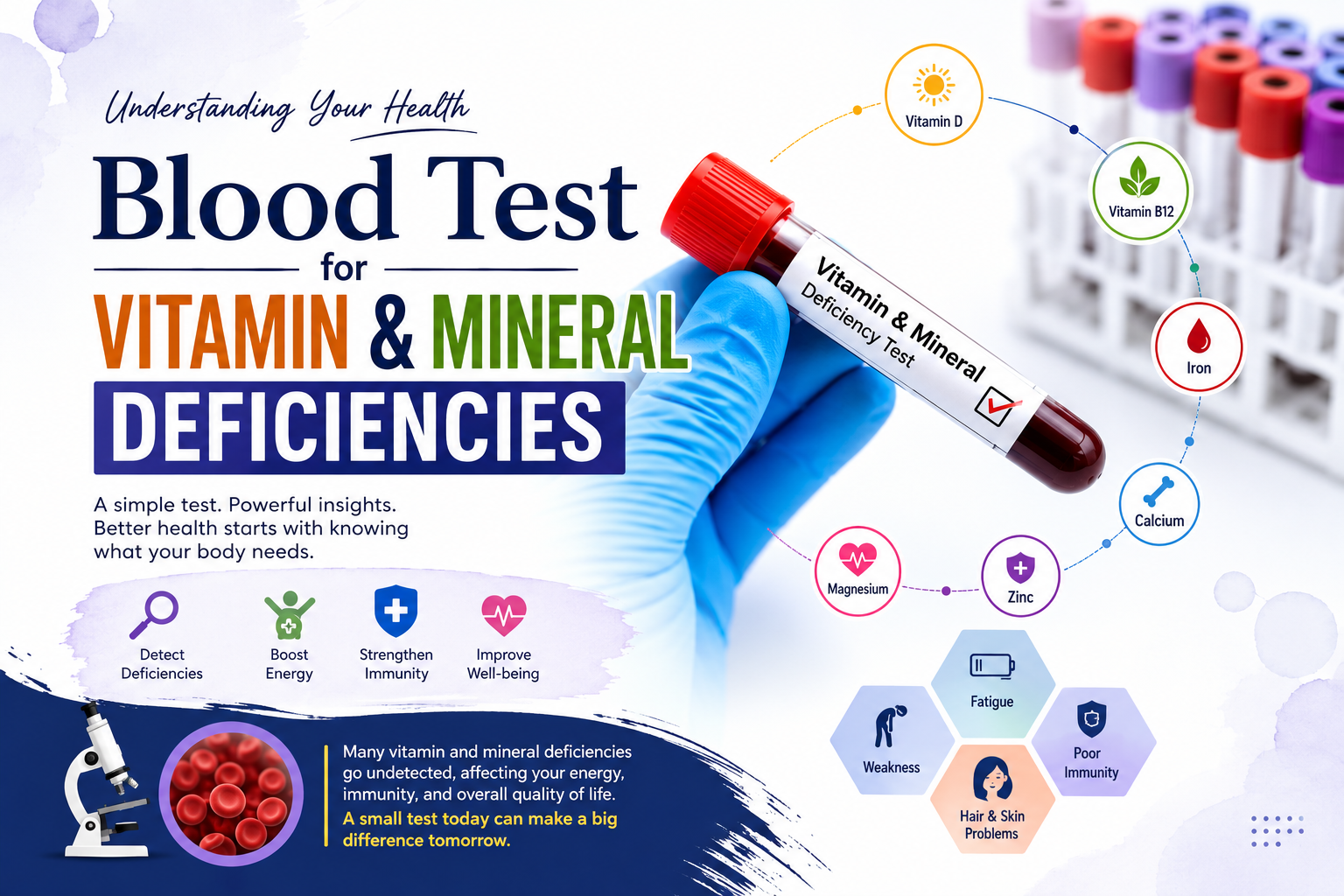
Blood Test for Vitamin and Mineral Deficiencies: Complete Guide
Feeling tired all the time, losing hair, or catching every cold that goes around? The cause might not be stress or bad luck — it could be a hidden nutrient gap in your body.
Up to one-third of Americans may have at least one vitamin or mineral deficiency, often without any obvious symptoms. The only reliable way to know for sure is a blood test for vitamin and mineral deficiencies.
This guide explains exactly what these tests measure, how they work, when you need one, and how to make sense of your results.
Table of Contents:
What Is a Blood Test for Vitamin and Mineral Deficiencies?
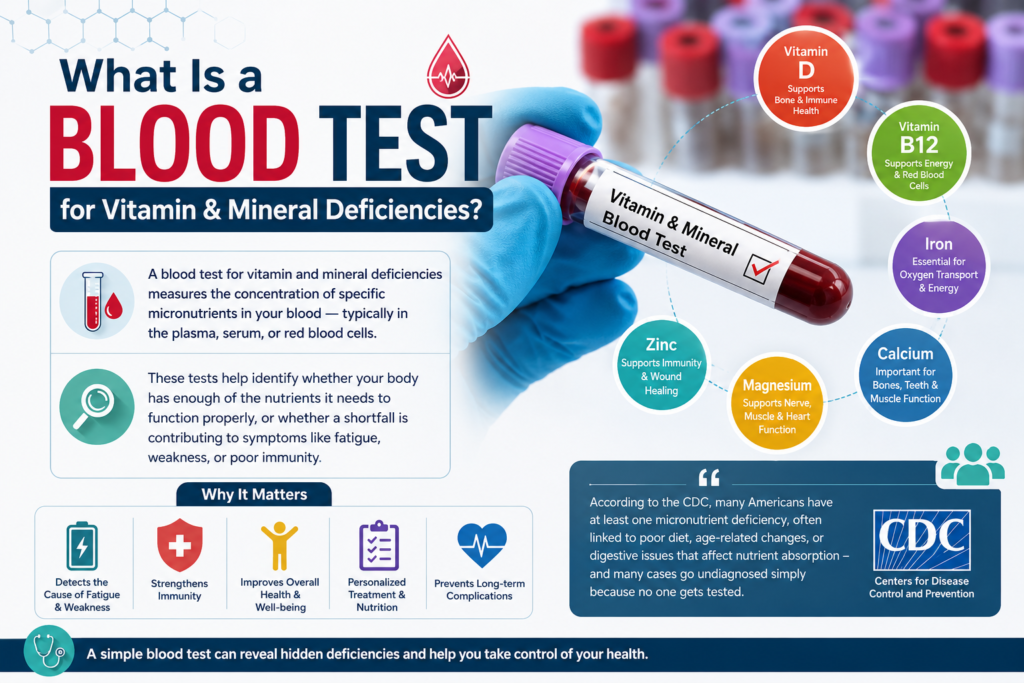
A blood test for vitamin and mineral deficiencies measures the concentration of specific micronutrients in your blood — typically in the plasma, serum, or red blood cells.
These tests help identify whether your body has enough of the nutrients it needs to function properly, or whether a shortfall is contributing to symptoms like fatigue, weakness, or poor immunity.
Featured Snippet Answer: A blood test for vitamin and mineral deficiencies measures nutrient levels in your blood — such as vitamin D, B12, iron, and calcium — to detect deficiencies that may be causing fatigue, weakness, or other health issues.
According to the CDC, many Americans have at least one micronutrient deficiency, often linked to poor diet, age-related changes, or digestive issues that affect nutrient absorption — and many cases go undiagnosed simply because no one gets tested.
Signs You Might Need Testing:
Deficiency symptoms often overlap, making them easy to dismiss. Common warning signs include:
- Persistent fatigue or low energy
- Frequent illness or slow-healing wounds
- Hair thinning or hair loss
- Muscle weakness or cramps
- Numbness or tingling in hands and feet
- Brittle nails or pale skin
- Difficulty concentrating or “brain fog”
- Mood changes, including irritability or low mood
If you’re experiencing several of these symptoms, a blood test for vitamin and mineral deficiencies can help pinpoint the cause instead of guessing.
Common Vitamins and Minerals Tested:
Most standard panels focus on the nutrients most commonly deficient in the general population. Broader panels may include 8–12 vitamins plus several minerals for a fuller picture.
1. Vitamin D:
Vitamin D supports bone health, muscle function, and immune regulation. Low levels are extremely common, especially in people who get limited sun exposure.
2. Vitamin B12:
B12 is essential for nerve function and red blood cell production. Deficiency can cause fatigue, numbness, and in severe cases, anemia.
3. Folate (Vitamin B9):
Folate works closely with B12 and is particularly important during pregnancy for healthy fetal development.
4. Iron (Ferritin):
Iron testing helps diagnose anemia or, less commonly, iron overload. Low ferritin is one of the most common deficiencies in women of reproductive age.
5. Calcium:
Calcium is critical for bone strength and muscle and nerve function.
6. Magnesium and Zinc:
These minerals interact closely with vitamins in the body and are increasingly included in standard nutrient panels.
7. Vitamin A, C, E, K, and B6:
Broader micronutrient panels may also test these vitamins, which support immunity, skin health, blood clotting, and metabolism.
Functional Markers:
Some advanced panels also test homocysteine and methylmalonic acid (MMA) — markers that can reveal how well your body is actually using B12 and folate, even when standard levels look normal.
“Modern industries are changing rapidly with new ideas and technologies. You can also explore our guide on Top Small Business Trends in 2026 to understand how businesses are adapting to future challenges.”
Types of Blood Tests Available:
There are two main ways to get tested:
- Venous blood test — A nurse or phlebotomist draws blood from a vein, typically at a clinic or lab. This is the standard method for comprehensive panels.
- Capillary (at-home) blood test — You collect a small sample yourself using a finger-prick lancet or autodraw device, then mail it to a lab for analysis.
Panel options typically include:
- Single-nutrient tests — check one vitamin or mineral, such as a vitamin D or B12 test
- Targeted panels — bundle related nutrients, such as iron and ferritin, or B12, folate, and TSH
- Comprehensive vitamin panels — test up to 13 vitamins at once
- Full micronutrient panels — combine vitamins, minerals, and functional markers for a complete nutritional snapshot
How to Prepare for the Test:
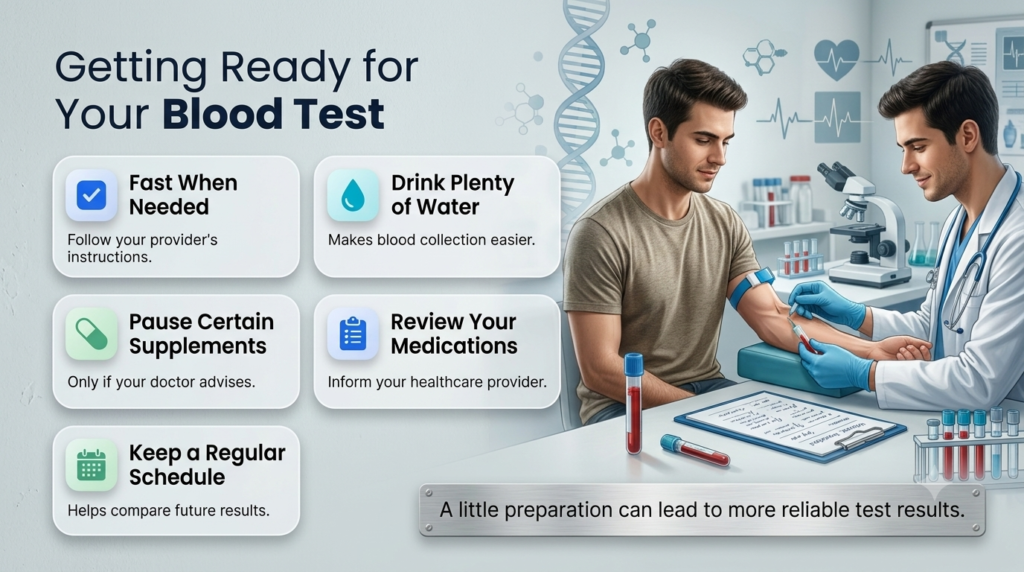
Proper preparation helps ensure your results are accurate. Follow these steps:
- Follow fasting instructions if required — some markers are sensitive to recent food intake
- Stay hydrated — dehydration can make blood draws harder and may skew certain results
- Avoid high-dose supplements for a few days beforehand if your provider recommends it
- Share your medications with your provider, since some drugs affect nutrient absorption
- Schedule consistently — testing at a similar time of day can help with tracking changes over time
Understanding Your Results:
Once your results come back, your provider will compare them to standard reference ranges to flag any levels that are too low or too high.
A few important things to keep in mind:
- Reference ranges reflect population averages, not necessarily optimal health — a result inside the “normal” range can still be suboptimal for you.
- Plasma or serum levels don’t always reflect true tissue nutrient status, which is why functional markers are sometimes used alongside standard tests.
- One low result doesn’t always mean a chronic deficiency — your provider will consider your symptoms, diet, and health history together.
Pro Tip: Don’t try to interpret borderline results on your own. A healthcare provider can put your numbers in context and recommend next steps.
“For more information about health guidelines and global health research, visit the World Health Organization.”
What to Do If You’re Deficient:
If your blood test for vitamin and mineral deficiencies comes back showing a shortfall, your provider will typically recommend one or more of the following:
- Dietary changes — adding nutrient-dense foods that target your specific deficiency
- Oral supplements — the most common first step for mild to moderate deficiencies
- Injections or higher-dose treatment — sometimes needed for severe B12 or iron deficiencies
- Follow-up testing — to confirm your levels are improving after treatment
Important: Most people can get the nutrients they need through a varied, balanced diet. If your levels are normal, you don’t need to take supplements just for the sake of it — more isn’t always better with vitamins and minerals.
Frequently Asked Questions:
1. What does a blood test for vitamin and mineral deficiencies check?
It typically checks levels of vitamin D, B12, folate, iron, and calcium, though broader panels can include additional vitamins, minerals, and functional markers like homocysteine.
2. How do I know if I need a vitamin deficiency blood test?
Common signs include persistent fatigue, hair loss, muscle weakness, frequent illness, and difficulty concentrating. If you notice several of these, talk to your doctor about testing.
3. Do I need to fast before a vitamin deficiency blood test?
It depends on the specific test. Some markers are sensitive to recent food intake, so always follow your provider’s or lab’s fasting instructions.
4. Can I take a vitamin deficiency blood test at home?
Yes. Many labs offer at-home capillary blood tests using a finger-prick sample, which you mail back for analysis, though a venous draw at a clinic is used for more comprehensive panels.
5. What happens if my blood test shows a deficiency?
Your provider may recommend dietary changes, oral supplements, or in more severe cases, injections or higher-dose treatment, along with follow-up testing to track improvement.
Conclusion:
A blood test for vitamin and mineral deficiencies takes the guesswork out of your nutrition and health. Instead of wondering why you feel tired or run down, you get clear, actionable answers.
If you’ve been experiencing unexplained fatigue, hair loss, or other symptoms on this list, don’t ignore them.
Ready to find out what’s really going on inside your body? Talk to your healthcare provider about getting a vitamin and mineral deficiency blood test today.
This article is for informational purposes only and is not a substitute for professional medical advice. Always consult a healthcare provider before starting any supplement or treatment plan.
One thought on “Blood Test for Vitamin and Mineral Deficiencies: Complete Guide”