



 1
1

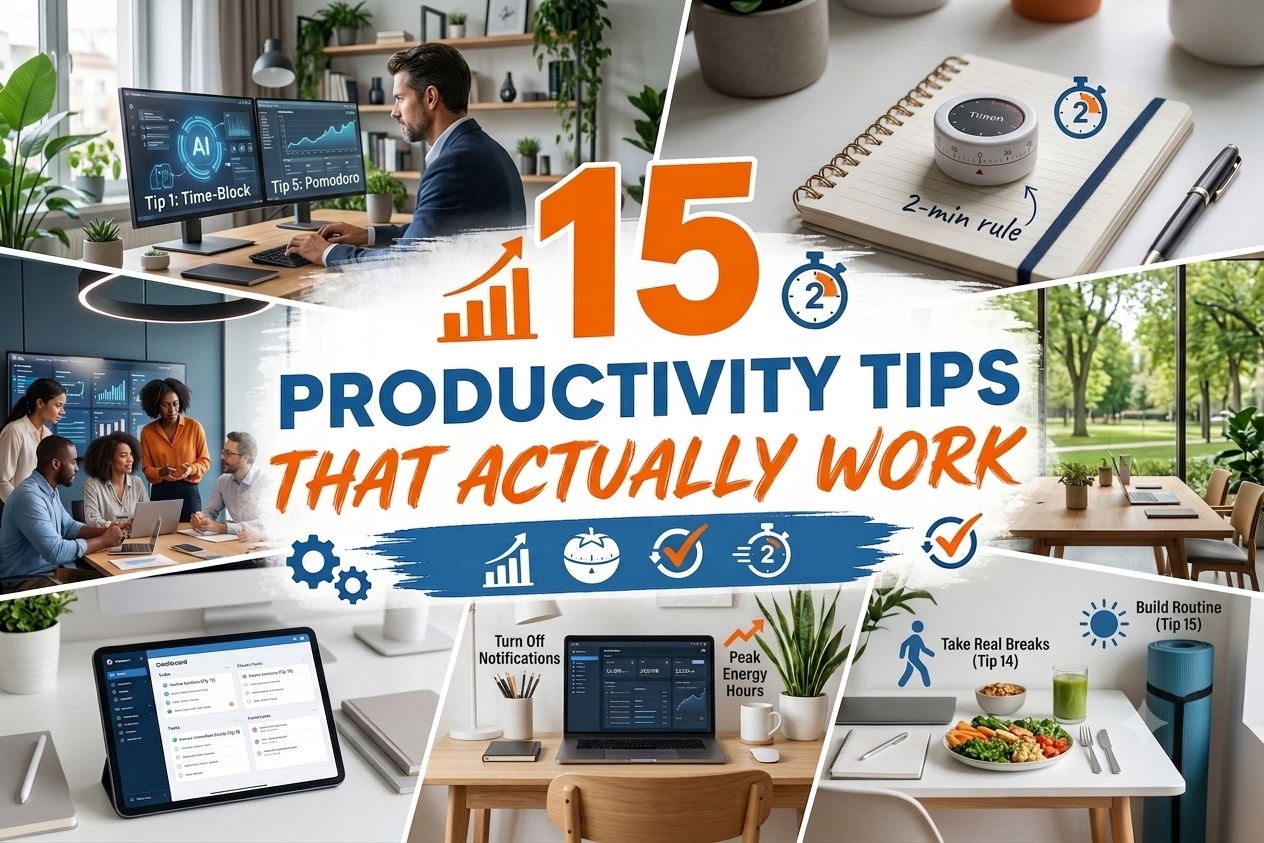
15 Productivity Tips That Actually Work (2026):
You know the feeling: a to-do list a mile long, a full day ahead of you, and somehow it’s 6 p.m. and you’ve barely made a dent in it.
You’re not lazy — you’re probably just using the wrong system.
The right productivity tips aren’t about working longer hours or grinding harder. They’re about working smarter, protecting your focus, and making your time actually count.
This guide breaks down proven, practical strategies you can start using today to get more done with less stress.
Table of Contents:
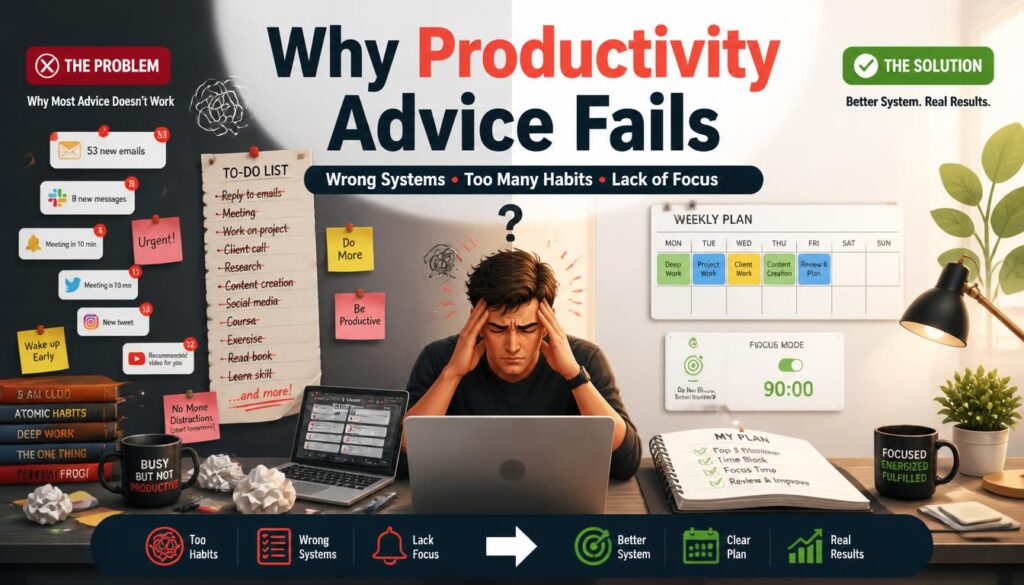
Why Most Productivity Advice Fails:
Most people don’t struggle with productivity because they lack willpower — they struggle because they’re using systems that don’t fit how their brain actually works.
Common reasons productivity advice fails:
- Trying to adopt too many new habits at once
- Relying purely on motivation instead of systems
- Ignoring energy levels and focusing only on time
- Copying routines that work for someone else’s lifestyle
Featured Snippet Answer: The most effective productivity tips include time-blocking your schedule, using the two-minute rule, eliminating distractions during focused work, taking regular breaks, and prioritizing tasks by impact rather than urgency.
The best productivity tips work because they align with how attention, energy, and motivation naturally function — not against them.
Productivity Tips for Planning Your Day:
1. Time-Block Your Schedule:
Instead of a vague to-do list, assign specific time slots to each task.
- Block time for deep work, meetings, and breaks separately
- Leave buffer time between blocks for overflow
- Review and adjust your blocks each evening for the next day
2. Use the 1-3-5 Rule:
Structure your daily to-do list around:
- 1 big task — your most important priority
- 3 medium tasks — moderately important work
- 5 small tasks — quick wins and minor to-dos
This keeps your day realistic instead of an overwhelming, endless list.
3. Prioritize by Impact, Not Urgency:
Urgent tasks often feel important but aren’t always valuable. Ask yourself: “What will actually move the needle today?” and tackle that first.
4. Plan the Night Before:
Spending five minutes planning tomorrow’s top priorities before bed reduces morning decision fatigue and helps you start the day with clarity.
Productivity Tips for Deep Focus:
5. Try the Pomodoro Technique:
Work in focused sprints, followed by short breaks:
- Work for 25 minutes with zero distractions
- Take a 5-minute break
- Repeat 4 times, then take a longer 20–30 minute break
6. Batch Similar Tasks Together:
Switching between unrelated tasks — like emails, calls, and creative work — drains mental energy. Group similar tasks together to stay in the same mental “mode” longer.
7. Turn Off Notifications During Focus Time:
- Silence phone notifications during deep work blocks
- Close unnecessary browser tabs and apps
- Use “Do Not Disturb” mode on your devices
8. Protect Your Peak Energy Hours:
Identify when you’re naturally most alert — usually within a few hours of waking for most people — and schedule your hardest tasks during that window.
Productivity Tips to Beat Procrastination:
9. Use the Two-Minute Rule:
If a task takes less than two minutes, do it immediately instead of adding it to your list. This prevents small tasks from piling up and creating mental clutter.
10. Break Big Tasks Into Smaller Steps:
Large projects feel overwhelming, which fuels procrastination. Break them into specific, actionable steps:
- Instead of “write report,” try “outline report sections”
- Instead of “clean house,” try “clean kitchen counters”
11. Use the 5-Minute Rule:
Tell yourself you’ll only work on a task for five minutes. Often, starting is the hardest part — once you begin, momentum carries you forward.
12. Remove Friction for Good Habits:
Make it easier to start productive tasks by preparing in advance — lay out your materials, open the right documents, or set your workspace up the night before.
Productivity Tips for Energy and Habits:
13. Prioritize Sleep:
Poor sleep directly reduces focus, decision-making, and memory. Consistent, quality sleep is one of the most underrated productivity tips available.
14. Take Real Breaks:
- Step away from screens during breaks
- Go for a short walk or stretch
- Avoid scrolling social media as a “break,” since it rarely feels restful
15. Build a Consistent Routine:
Predictable routines reduce decision fatigue and make productive habits feel automatic rather than effortful over time.
Tools That Support Productivity:
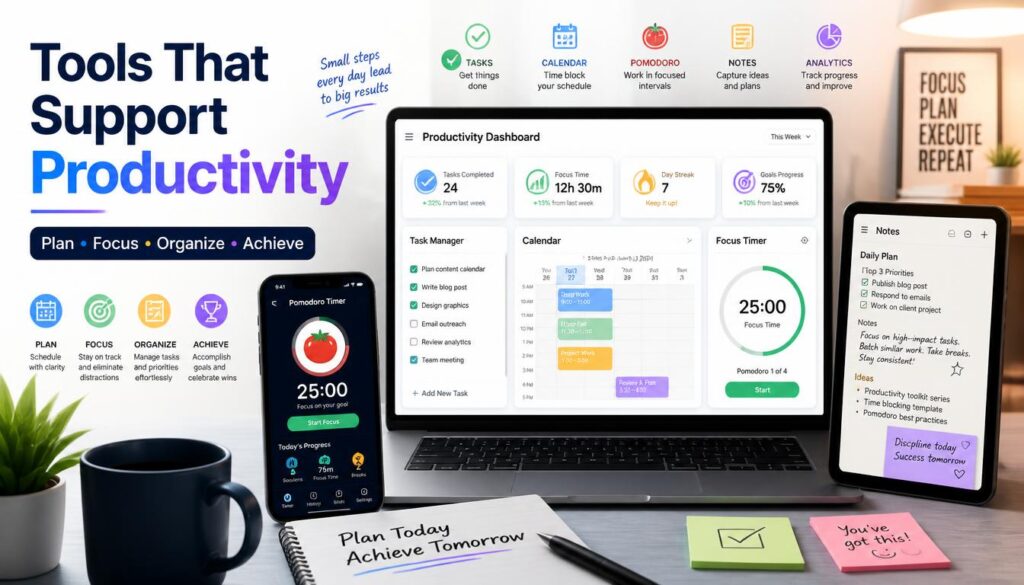
The right tools can reinforce good habits, though they work best alongside — not instead of — solid systems.
- Task managers — apps like to-do lists or Kanban boards to organize priorities
- Calendar blocking apps — for visualizing and protecting time blocks
- Focus/timer apps — to structure Pomodoro-style work sessions
- Note-taking apps — to capture ideas quickly without breaking focus
Pro Tip: Don’t chase the “perfect” productivity app. A simple system you actually use beats a complex one you abandon after a week.
Common Productivity Mistakes to Avoid:
Even motivated people sabotage their own productivity with these habits:
- Multitasking — switching tasks constantly reduces overall efficiency
- Overloading your to-do list — unrealistic lists create stress, not progress
- Skipping breaks — leads to burnout and declining focus over the day
- Working without clear priorities — busyness isn’t the same as productivity
- Ignoring energy levels — scheduling hard tasks during your lowest-energy hours
Frequently Asked Questions:
1. What are the best productivity tips for beginners?
Start simple: time-block your day, use the 1-3-5 rule for your to-do list, and eliminate notifications during focused work sessions.
2. How can I stop procrastinating?
Break tasks into smaller steps, use the two-minute or five-minute rule to build momentum, and remove friction that makes starting harder than it needs to be.
3. What is the most effective time management method?
Time-blocking and the Pomodoro Technique are among the most effective methods, since they structure your day around focused work and built-in breaks.
4. Do productivity apps actually help?
Yes, when paired with a clear system — task managers, calendar blocking, and focus timers can reinforce good habits, but the app alone won’t fix poor planning.
5. How many hours a day should I focus on deep work?
Most people can sustain 2–4 hours of true deep, focused work per day; beyond that, quality tends to decline without adequate breaks.
The concept of deep work is explained in detail by Deep Work, which explores strategies for improving concentration and focus.
Conclusion:
Real productivity tips aren’t about cramming more into your day — they’re about protecting your time, energy, and focus so the hours you do work actually count.
Start small: pick one or two strategies from this guide, like time-blocking or the two-minute rule, and build from there.
Taking time away from work is also important for maintaining productivity. Planning a relaxing trip can help you recharge — check out our guide on 12 Best Places to Visit in October (2026 Guide) for travel inspiration.
Ready to get more done with less stress? Choose one productivity tip from this list and put it into action today.
Great to see the food industry taking meaningful steps toward sustainability. Innovations like these are essential for a healthier planet and future.