



 1
1
Smart Home Technology: The Complete 2026 Guide:
Not long ago, a “smart home” meant a single voice assistant that could turn on the lights — if you asked it just right. Today, homes can anticipate your routine before you even walk in the door.
Smart home technology has moved well past novelty gadgets. Over half of U.S. households now have at least one connected device, and the average smart home contains 15–20 of them, working together instead of in isolated silos.
This guide breaks down what’s driving the shift, the categories worth investing in, and how to build a smart home that actually feels smart — not chaotic.
Table of Contents
What Is Smart Home Technology?
Smart home technology refers to internet-connected devices and systems that let you monitor, control, and automate functions like lighting, temperature, security, and entertainment — often from a single app or voice command.
These systems typically rely on:
- IoT (Internet of Things) connectivity linking devices together
- AI algorithms that learn your habits and preferences over time
- Wireless protocols like Wi-Fi, Zigbee, and increasingly, Matter
- Central hubs or apps that coordinate everything into unified routines
Featured Snippet Answer: Smart home technology refers to connected devices — like smart thermostats, lighting, locks, and security cameras — that can be controlled remotely or automated through AI, allowing homes to respond intelligently to daily routines.
A simple example: a single “good night” command can lock your doors, dim your lights, and adjust your thermostat simultaneously, instead of requiring three separate actions.
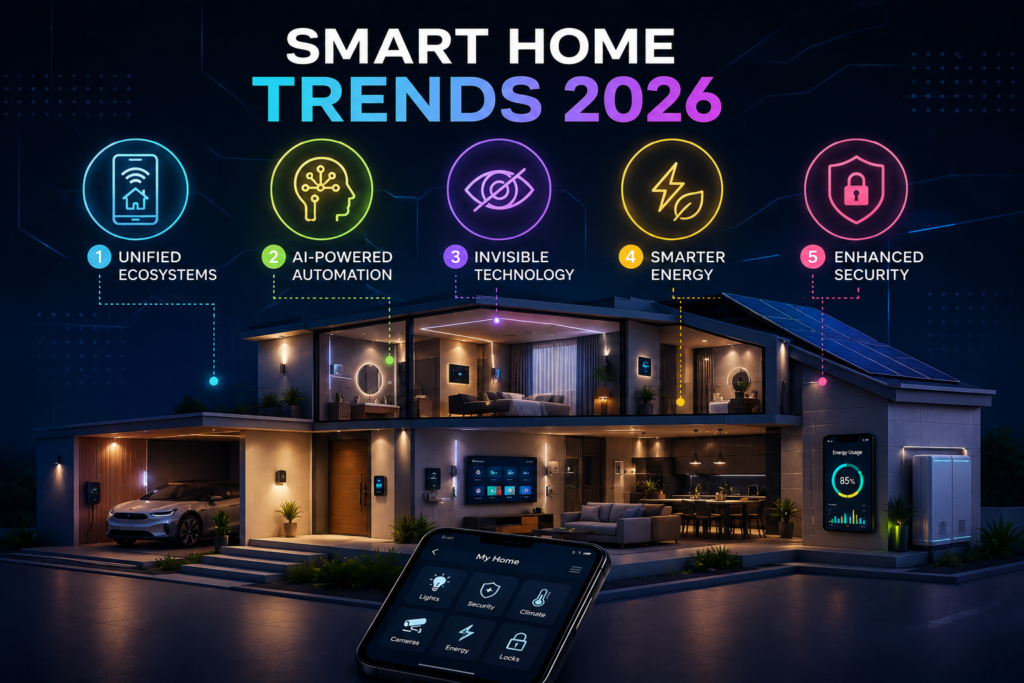
Top Smart Home Technology Trends for 2026:
1. Unified Ecosystems Replace Fragmented Apps:
For years, the biggest complaint about smart homes was fragmentation — one app for lighting, another for locks, another for the thermostat, none of them talking to each other.
That’s changing rapidly, largely thanks to the Matter protocol, a universal connectivity standard.
- Over 550 technology companies are now developing Matter-compatible products
- Devices from different brands can increasingly work together in a single app
- This eliminates the need for multiple, disconnected control systems
2. AI-Powered Automation:
Smart home technology in 2026 is shifting from simple remote control to genuine prediction and automation.
- AI assistants now handle routine tasks like managing grocery lists or adjusting lighting moods
- Systems increasingly anticipate needs rather than waiting for commands
- Robotic devices now handle household chores across multiple rooms or floors
3. Invisible, Design-Friendly Technology:
Homeowners increasingly want smart features that blend into their interior design rather than stand out as visible gadgets.
- Speakers, shading, and controls are being built into architecture
- Aesthetics now play a much bigger role in purchase decisions than in past years
- The trend reflects a shift from “gadget purchase” to lifestyle integration
4. Smarter Energy Management:
Rising utility costs are pushing homeowners toward technology that actively reduces energy waste.
- Smart shades and thermostats optimize energy use automatically
- Real-time monitoring helps identify and reduce unnecessary consumption
- Storm-ready and weather-adaptive routines are becoming more common in newer systems
5. Enhanced Privacy and Security Focus:
As adoption grows, users are paying closer attention to how their data is managed and how devices communicate.
- Platform security updates and protected system architectures are becoming standard features
- Native, privacy-focused voice assistants are emerging as alternatives to third-party options
- Secure, closed ecosystems are increasingly marketed as a selling point, not an afterthought
Essential Smart Home Device Categories:
If you’re building or upgrading a smart home, these categories offer the most practical value.
Smart Lighting:
- Adjustable brightness, color, and scheduling
- Can sync with routines like “movie night” or “good morning”
- Often among the easiest and most affordable entry points
Smart Thermostats:
- Learn your schedule and adjust temperature automatically
- Can reduce energy costs through optimized heating and cooling
- Often integrate with weather data for smarter adjustments
Smart Security Systems:
- Cameras, doorbells, and locks accessible remotely via app
- Real-time alerts for unusual activity
- Increasingly integrated with AI for more accurate motion and person detection
Smart Speakers and Voice Assistants:
- Central hub for controlling other connected devices
- Increasingly natural, conversational voice interaction
- Growing focus on privacy-conscious, secure voice processing
Smart Appliances
- Refrigerators, ovens, and washers with remote monitoring and control
- Energy-usage tracking built into many newer models
- Integration with grocery and meal-planning features in some ecosystems
Smart Locks and Access Control:
- Keyless entry via app, code, or biometric access
- Remote lock/unlock capability for guests or deliveries
- Activity logs showing who entered and when
Benefits of Smart Home Technology:
Beyond convenience, smart home technology offers several practical advantages:
- Energy savings — automated heating, cooling, and lighting reduce waste
- Improved security — real-time monitoring and remote access provide peace of mind
- Convenience — routines handle multiple tasks with a single command
- Accessibility — voice control and automation can support aging-in-place or mobility needs
- Increased home value — smart features are increasingly expected, not just a luxury add-on
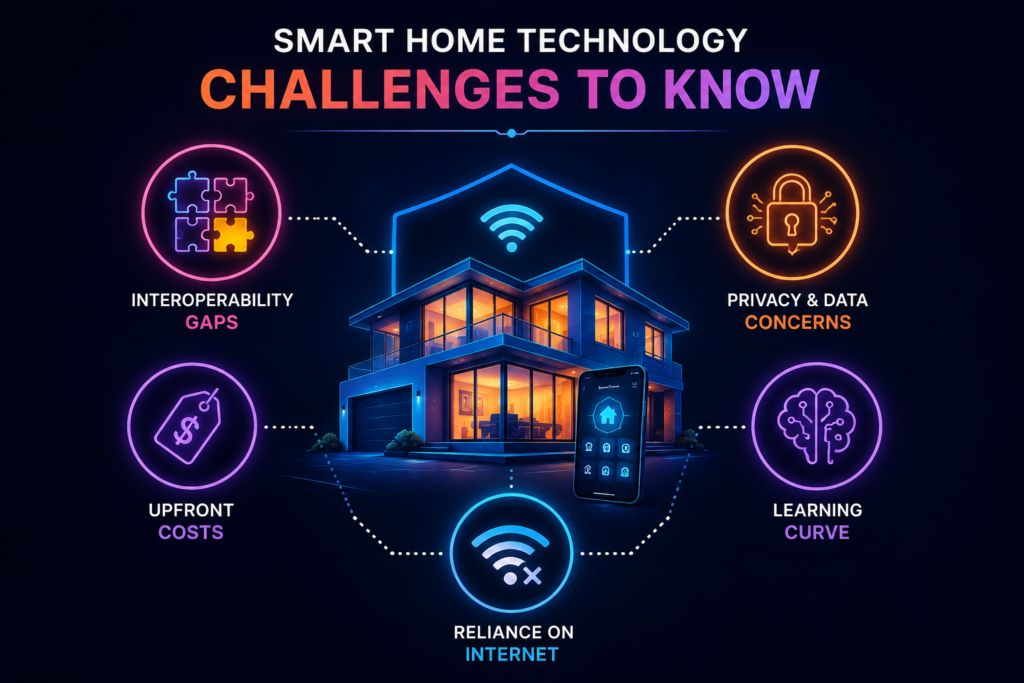
Smart Home Technology: Challenges to Know:
Despite rapid progress, a few challenges are worth understanding before you invest heavily.
- Interoperability gaps — while Matter is helping, not all devices are fully compatible yet
- Privacy and data concerns — connected devices collect usage data that requires careful management
- Upfront costs — comprehensive systems can require significant initial investment
- Learning curve — some systems still require setup time and troubleshooting
- Reliance on internet connectivity — outages can disrupt automated routines
How to Start Building a Smart Home:
You don’t need to automate your entire house at once. Use this simple approach:
- Start with one category — smart lighting or a smart thermostat are easy, affordable entry points
- Choose a Matter-compatible ecosystem where possible, for easier future expansion
- Set up basic routines before adding complexity, like a “good morning” or “away” mode
- Add security features next — smart locks and cameras offer high practical value
- Expand gradually, testing compatibility before committing to a full-home system
Pro Tip: If multiple systems need to work together reliably, many homeowners find it worthwhile to use a professional smart home integration service rather than piecing everything together alone.
Frequently Asked Questions:
1. What is smart home technology, in simple terms?
Smart home technology refers to internet-connected devices — like lighting, thermostats, and security systems — that can be controlled remotely or automated to work together intelligently.
2. What is the Matter protocol and why does it matter?
Matter is a universal smart home connectivity standard designed to let devices from different brands work together in a single app, solving the long-standing problem of fragmented smart home systems.
3. Is smart home technology worth the investment?
For most homeowners, yes — it offers energy savings, improved security, and convenience, and increasingly adds to home resale value as buyer expectations shift.
4. What’s the easiest smart home device to start with?
Smart lighting and smart thermostats are typically the easiest and most affordable entry points, offering noticeable convenience and energy savings with minimal setup.
5. Are smart home devices safe from hackers?
Reputable smart home brands now prioritize security through encrypted communication and regular software updates, but users should still use strong passwords and keep devices updated to minimize risk.
Conclusion:
Smart home technology in 2026 has moved beyond scattered gadgets into cohesive, intelligent ecosystems that quietly improve daily life — from energy savings to enhanced security.
Whether you’re starting with a single smart thermostat or planning a full-home automation system, the technology is more accessible and interoperable than ever before.
Ready to build your smart home? Start with one device category from this guide, and expand your system as your needs and budget grow.